How should you price an intro offer?
Eugen Esanu, Founder of TimiTomi6 min read
The short answer
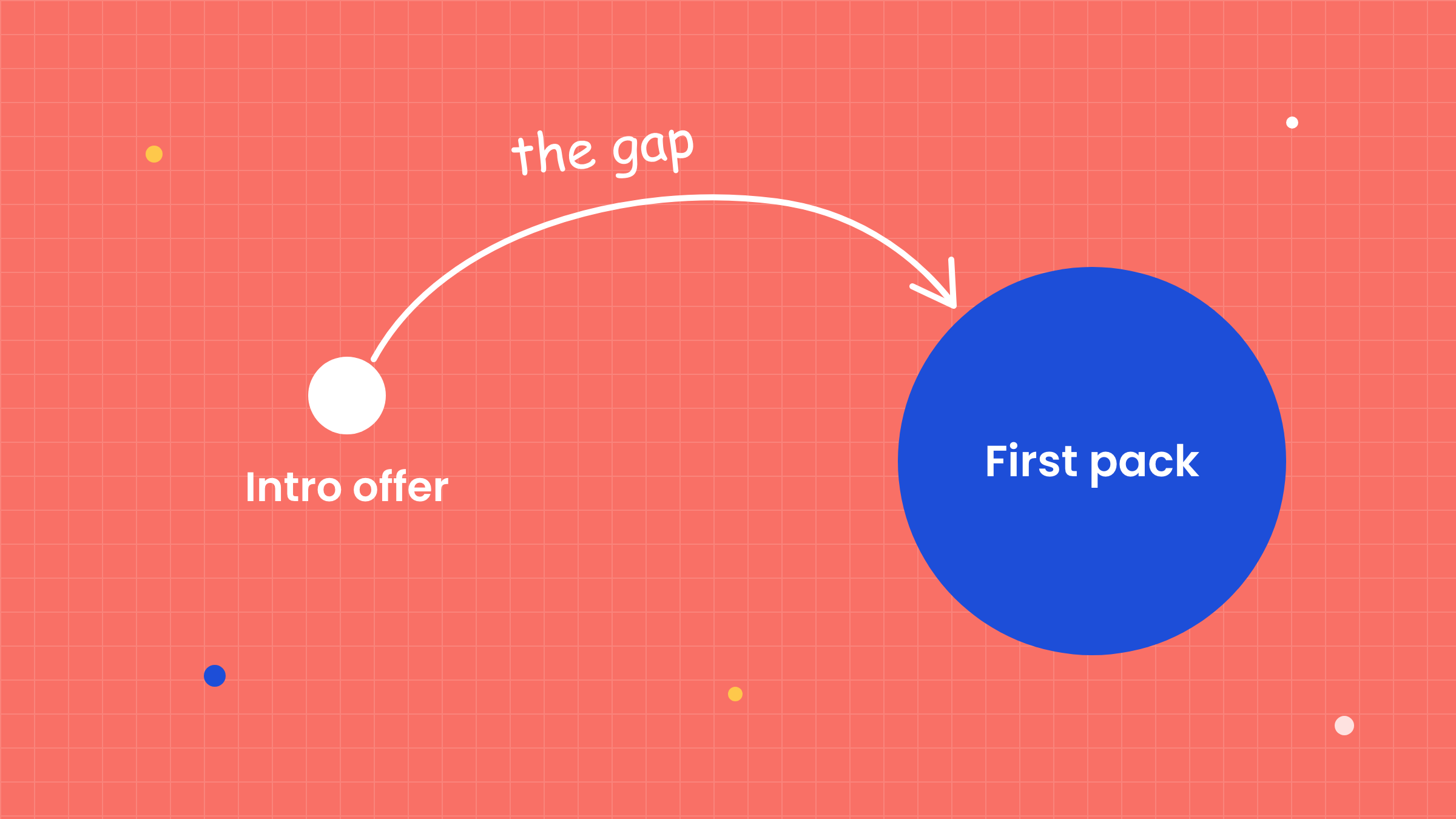
Price your intro offer close to your regular prices. The intro price is rarely the real problem. The problem is the gap between the intro and your first regular pack. A small gap makes the next step easy. A big gap makes people leave.
The gap matters more than the price
Many studios make their intro offer very cheap. A common example is two weeks of unlimited classes for $70. A new customer comes 10 times, so each class costs them $7.
Then the intro ends, and the customer sees your regular prices. Your first pack is 6 classes for $100. That is about $17 a class, more than double what they paid last week.
The customer does not compare your pack with other studios. They compare it with your intro. Next to $7, a class at $17 looks expensive, even when $17 is a fair price.
A cheap intro costs you later
Some studios go even lower. Imagine a 5-class pack for $80, and next to it two weeks of unlimited classes for $45. Each studio tries to be cheaper than the others, and nobody wins.
A cheap intro feels good for a few weeks, because many people buy it. Over time, it hurts you in three ways:
- Fewer of your intro customers buy a regular pack after it.
- You start to discount your regular prices to make the gap smaller.
- You make no profit on the intro, and less profit on everything after it.
Start your intro from your price for one class
Start from your price for one class, not from what other studios charge. If one class at your studio costs $20, offer 3 classes at $15 each, so $45 in total. The customer still saves money, and the step to your regular pack is small.
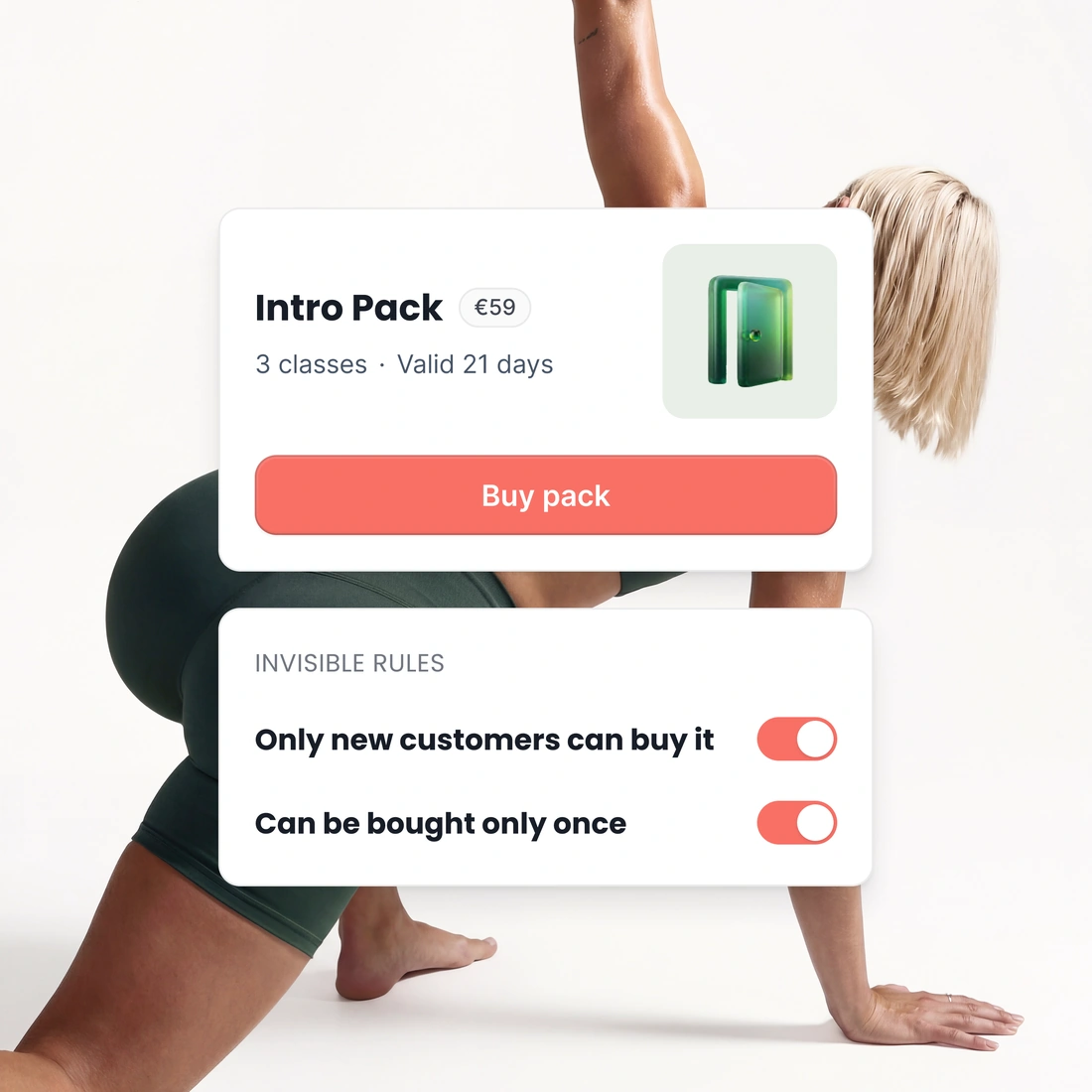
At our studio, we tested €50, €55 and €59 for 3 classes. We chose €59. Our most popular membership is 4 classes a month for €99. So the intro is about €20 a class, and the membership is about €25. The intro still feels like a good deal, and the step after it is small. Most people who stay buy that membership or our 5-class pack.
About half of our intro customers buy a pack or a membership after the intro. This number changes with the season, so do not expect it every month.
Expect many people to leave
Many intro customers never return, and that is normal. Some are tourists. Some are studio hoppers: people who try a new studio every few weeks and never stay anywhere. A lower price does not change this. Include them when you plan your numbers.
10 intro customers
- About half stay and buy a pack or a membership
- The rest never return. Some are tourists, some are studio hoppers.
The second class matters most
After the first class, send a short, personal message. Ask how the class was, and offer to book the next one for them.
Hi Sofia, how was your first class? Are you sore today?
I loved it. A little sore!
Would you like me to book your next class? Thursday at 18:00 has 3 spots left.
Yes please
Booked: Reformer Pilates, Thursday 18:00
This takes one minute, and it shows the customer that a real person cares about them. A small studio can do this for every new customer. It is one of the things a small studio does better than a big one.
A paid 3-class intro works better than a free one, but only if you plan it for the classes after the first. Plan for the second class, the third, and then the fourth and fifth:
- Book the next class before they leave. Ask at the desk after the first class, while they still feel good about it.
- Ask the instructor to send a message. A note from the person who taught the class feels personal.
- Give them a reason to decide. Offer a small discount on their first pack or membership, but only until the intro ends.
Without these steps, a 3-class intro is only a cheap way to try your studio once.
Is unlimited a good idea?
An unlimited intro can work, but make it one week at most, and calculate the cost first.
Most people come 2 or 3 times a week. A few come much more. Some of our customers on unlimited plans came 5 or 6 times a week. That costs you money. It also builds a habit, and a habit keeps a customer. So an unlimited intro can help you or hurt you. We recommend it only after you have tested all your other options. Keep it as your last option.
One week unlimited for $45
If your intro is already too cheap
Stop selling it. Replace it with an intro close to your regular prices.
Some customers will tell you that your regular prices are too high. For them, you can give 10% to 15% off their first regular pack or month. Do not give more. A bigger discount keeps the gap, and it teaches people to wait for discounts.
Test, then test again
Do not be afraid to test. Your customers, your area and your location are different from ours. What works for us may not work for you. Run one intro for a month or two, check how many people stay, then change one thing and test again.
We all want the safe path.
You do not open a business to be on the safe path. You are on the path of taking risks, for the potential of higher rewards. Those higher rewards come only if you are willing to test something new and stand out from the competition.

Testing is how a studio grows. It is how we found the price of our own intro.
When this is not right for you
- Your classes are often half empty. An empty spot earns nothing, so an unlimited week costs you little. It can fill those spots and build habits. Here it can be one of the first things you test, not the last.
- Most of your regulars are on unlimited. Then an unlimited intro week shows people the same thing they would buy next. Price the week close to a quarter of your monthly price, and the step after it stays small.
- Most of your customers are visitors. Tourists leave before an intro can become a membership, so the gap matters less. Sell what a visitor needs instead: a drop-in or a one-week pass at a fair price.
- You have many locations. A big budget can pay for a very cheap intro. A small studio pays much more for the same offer.
Your intro offer in TimiTomi
In TimiTomi, an intro offer is a class pack with limits. You can sell it only to new customers, or only once per customer, so a regular customer cannot buy the intro price again.